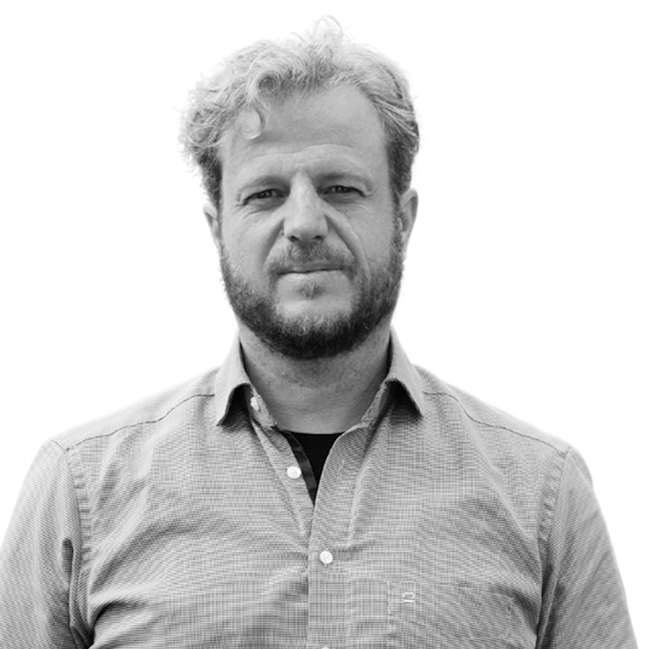
The pandemic-related travel restrictions kept me waiting for a long time. In January 2023, I can finally travel to Mexico to visit our community-based forest conservation project. After a twelve-hour flight, I land in Mexico City and, jet-lagged, meet our partner organization Cooperación Comunitaria. The next morning: onward journey to the project area in the state of Guerrero. 400 kilometers by car, another twelve hours of driving. It quickly becomes clear to me: Mexico is a huge country.
A social and ecological mosaic
Due to the various ecozones that the Central American state, with its 130 million inhabitants, encompasses, Mexico is one of the 17 megadiverse countries on the planet. Furthermore, the country is also an ethnic mosaic. Countless indigenous peoples live in Mexico, especially in the south. In the state of Guerrero, where we are implementing our project, a particularly large number of people belong to indigenous communities. Violent conflicts over land use rights occur here time and again. Large mining companies and drug cartels – the so-called “Narcos” – have been trying to establish themselves here for many years, against the will of the indigenous people. The Federal Foreign Office therefore strongly advises against traveling to the state of Guerrero. For safety reasons, we travel in a convoy of vehicles.
The GNF partner organization Cooperación Comunitaria has been working in the mountainous, inaccessible Montaña region of the state of Guerrero since 2013. After the region was first shaken by a violent earthquake, a hurricane raged a short time later and caused great destruction. In the aftermath of these natural disasters, Cooperación Comunitaria initially launched an aid project for the earthquake-proof reconstruction of the Montaña. This quickly evolved into a development program in which the indigenous Me’phaa community itself is involved. GNF has been a partner in the community-based forest protection project since 2020.
Traditional cuisine in new ovens
The Me’phaa accompany me to their village and show me how they live. Every morning before sunrise, the women start preparing the staple food: Tortillas, which are traditionally baked on wood-fired ovens. The ovens are powered by wood from the local copper beech, for which valuable mountain forests are cut down. Attempts to switch to gas have failed due to the higher purchase costs. Solar stoves are also out of the question, as you can’t bake tortillas on them and you cook and bake in the houses anyway. We therefore looked for a more sustainable solution that protects the forests and thus also reduces the risk of landslides and water shortages during the drought months.
Together with the women, the Cooperación Comunitaria is addressing precisely this issue and has developed a wood-saving stove in the course of numerous workshops. The new model was named “Juana” and is tailored precisely to the needs of the women, as they developed it themselves. Working together, the women have already built 40 wood-saving stoves. All the women agree that the new stoves are much more comfortable and save around 50 percent firewood. There is also a smoke outlet so that the women no longer have to stand in the smoke when baking the tortillas. With 40 families now using these stoves, many tons of firewood are saved over the year. As the Juana stove is a successful model, many other families have already asked if they can receive support to build their own stoves. We therefore intend to expand the program in the future. If every Me’phaa family in the area had a “Juana”, entire forests could be spared from deforestation.
Indigenous Self-Government for Forest Protection
Our project also aims to strengthen the twelve-member indigenous self-administration committee, which is elected for three years at a time. As the Me’phaa have no private land ownership, all landmark decisions regarding the management of the forests are made by the self-governing committee. Participatory workshops are held to raise awareness of sustainable use practices and strengthen the management skills of the committee. The Cooperación Comunitaria operates with great skill and enjoys a high level of trust thanks to its many years of work in the communities. It also helps that parts of the team themselves come from the Me’phaa community. Time and again, the workshops are translated from Spanish into the Me’phaa language so that all residents can follow and participate.
After an eventful week with many workshops and the inauguration of numerous new kitchens, I unfortunately have to leave Mexico again. Time is running out and it is now my task to secure follow-up funding together with the Cooperación Comunitaria so that many more wood-saving cooking stoves can be built in the coming years and community forest management can be improved. Then hopefully I will soon be able to return to this megadiverse, fascinating country and further deepen the partnership with the Cooperación Comunitaria and the Me’phaa communities and inspect many new cooking stoves.