- Biodiversity Conference in Brussels Presents Initial Findings from the EU LIFE Project “Fit for Biodiversity”
- Participants from business, politics, academia, and associations
- Food for Biodiversity Announces Roll-out Strategy for Implementing Biodiversity Criteria in Agricultural Supply Chains
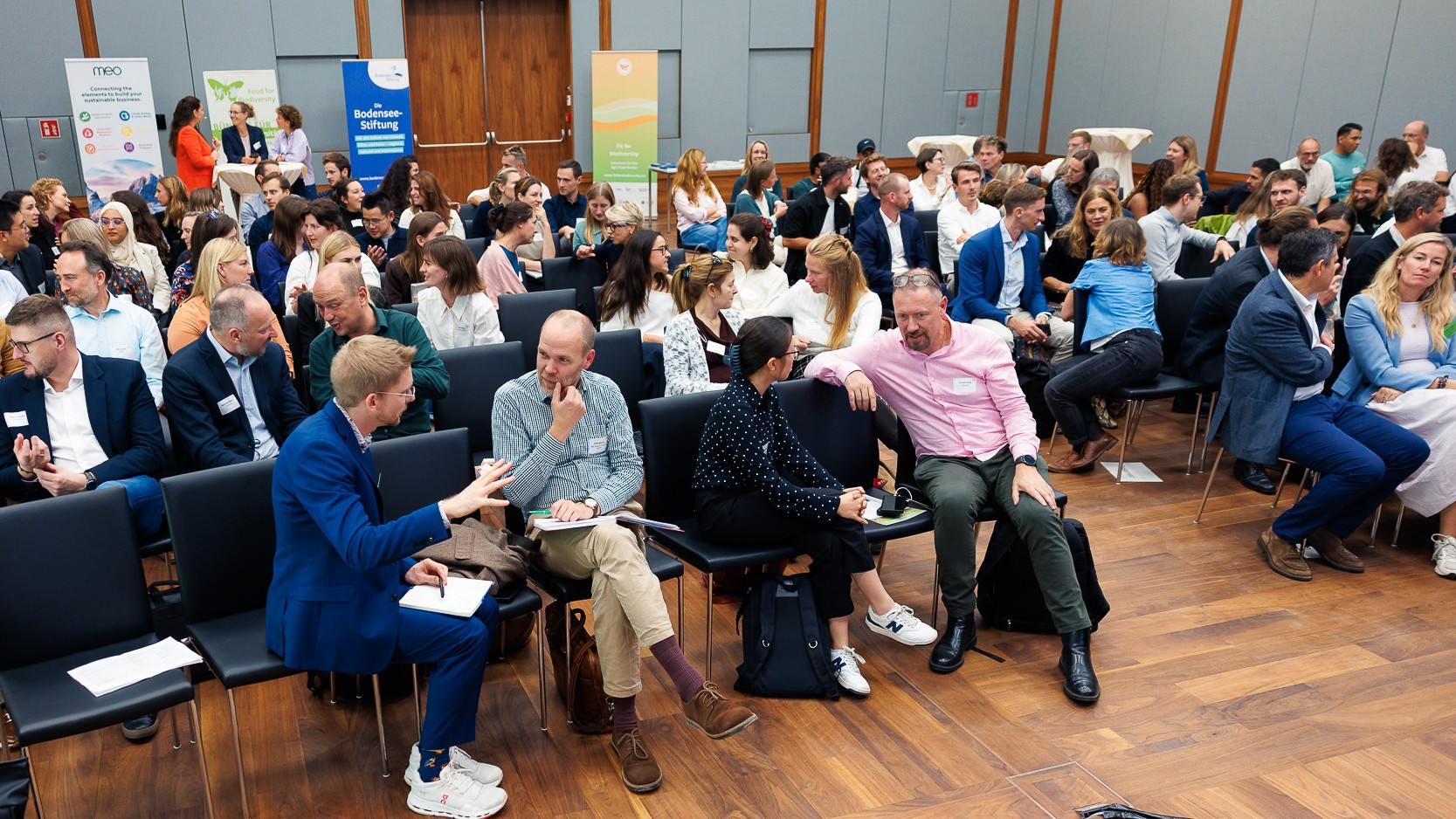
Brussels/Bonn, October 9, 2026. Laws and funding programs alone will not halt the loss of biodiversity. What is needed is a concerted effort by the food industry. This was the conclusion reached by the approximately 140 participants from business, politics, academia, and industry associations at the “Fit for Biodiversity – Solutions for the Agri-Food Sector” conference held in Brussels in October 2026.
The central question of the conference was: How do we move from a commitment to biodiversity conservation to the concrete and long-term implementation of measures in food systems?
“Climate protection and the preservation of biodiversity must be more closely integrated into corporate strategies. There are measures that can serve both goals,” says Stephanie Finkbeiner, Head of the Sustainability/CSR Division at EDEKA ZENTRALE Stiftung & Co. KG. “For the food industry in particular, protecting natural resources is an investment in long-term supply security.”
To embed biodiversity more firmly in corporate strategies, we need concrete real-world examples that make the environmental impact and economic benefits clear. “Concrete business cases can serve as motivation and demonstrate how implementation can succeed. We’re not starting from scratch; instead, we can build on existing experience. The focus now is on further developing effective approaches together with partners along the supply chain and scaling them up.”
Challenges Too Great for Lone Warriors
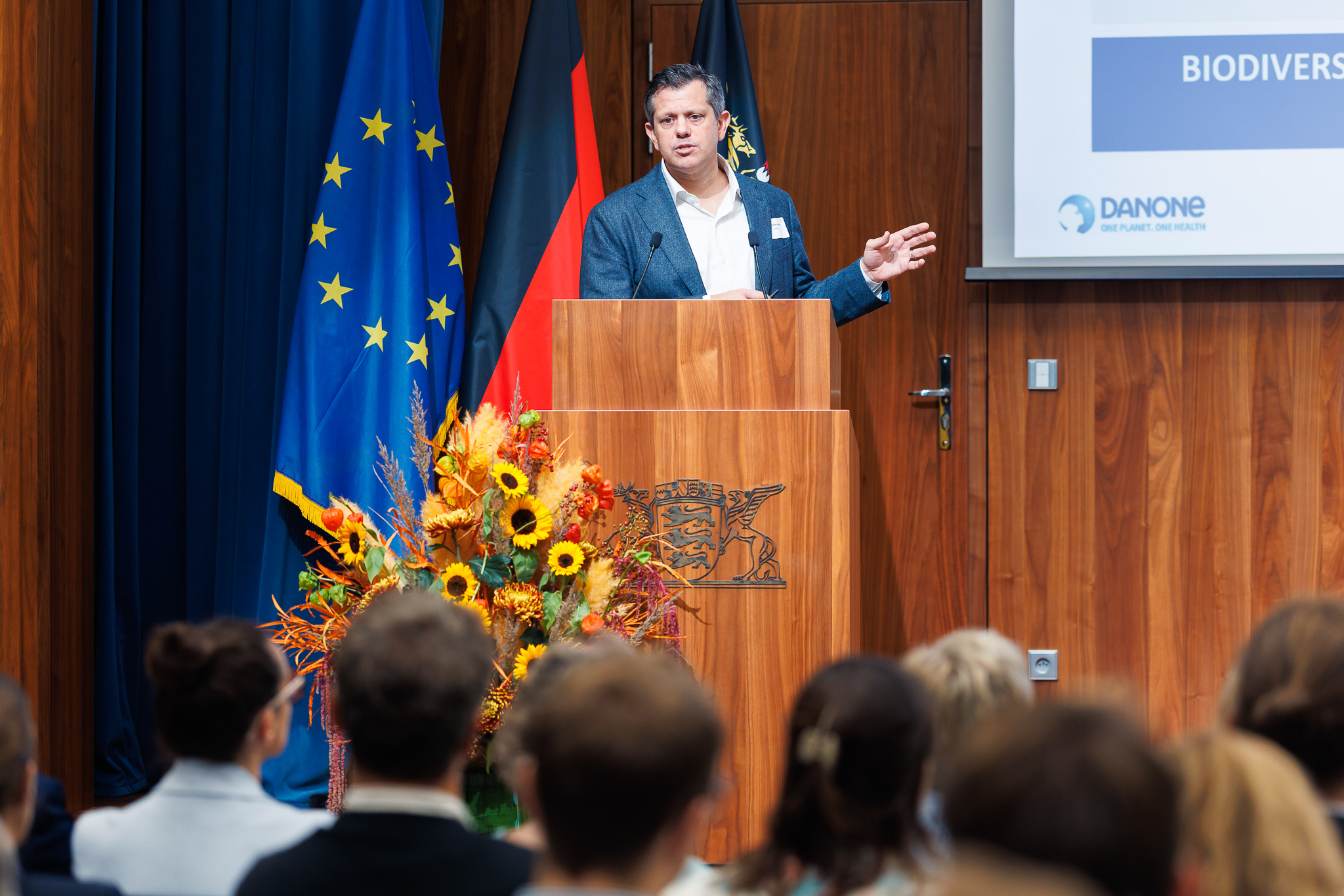
“Biodiversity, water, climate change: These challenges are too great for any single company or government to tackle alone. We will only make significant progress if the private and public sectors work together on better policy measures,” emphasizes Chris Adamo, VP of Global Sustainability Impact at Danone. At the conference, he presented Danone’s approach to sustainable practices, successfully implemented projects, and future plans.
“The protection of biodiversity must become an integral part of economic activity. This requires practical solutions and a shared commitment throughout the entire value chain,” confirms Alexander Bonde, Secretary General of the German Federal Environmental Foundation (DBU).
Protecting Biodiversity as an Economic Investment
Adamo adds that, following the commitment to protect biodiversity, the focus is now primarily on making progress in its implementation. “The private sector must play an active role in shaping this process.” The Food for Biodiversity association, which now includes all major German food retailers, is playing a pioneering role in this effort.
During the conference, the association presented its new “Strategy for the Roll-out of the Basic Set for Temperate Regions to Promote Biodiversity in the Food and Beverage Sector.” The association’s 36 members—from the business community, standards organizations, and trade associations—have thus established a joint roadmap and concrete goals for increasing biodiversity in agricultural supply chains.
The strategy firmly embeds biodiversity criteria into the requirements of food standards as well as into the procurement guidelines of food companies. The clear goal: By 2030, companies are to source two high-risk commodity groups (e.g., fresh fruits and vegetables) in accordance with established biodiversity criteria. The association will report on this annually.
The rollout strategy and the basic set of biodiversity criteria for agriculture in temperate regions are available for download.
More information about the ” Fit for Biodiversity – Solutions for the Agri-Food Sector” conference
About Fit for Biodiversity
The conference was part of the EU LIFE project “Fit for Biodiversity – Biodiversity Governance and Performance in the Food Sector,” organized by the Food for Biodiversity association in collaboration with project partners Global Nature Fund, Meo Carbon Solutions, the Lake Constance Foundation, and Justus Liebig University Giessen.
Fit for Biodiversity aims to improve biodiversity performance in the food sector and develop effective strategies for protecting ecosystems. The project supports companies in the agriculture and food industry in identifying biodiversity risks, implementing effective measures, and systematically integrating biodiversity into corporate and supply chain strategies.
The project is co-funded by the European Union’s LIFE program, the German Federal Environmental Foundation (DBU), the Baden-Württemberg Ministry of Food, Rural Affairs, and Consumer Protection, Rentenbank, the Postcode Lottery, and the premium partners Nestlé Germany, EDEKA, and Lidl. Learn more about the Fit for Biodiversity project
About the Global Nature Fund
The Global Nature Fund (GNF) is an international environmental foundation based in Germany. Since 1998, the GNF has been committed to the protection of water bodies, biodiversity, and ecosystems, and for the past 15 years has been advising companies on the effective implementation of biodiversity measures. The GNF is the coordinator of the EU LIFE project “Fit for Biodiversity.” For more information, visit www.globalnature.org